Crazy Grannies in Christmas Jumpers Review
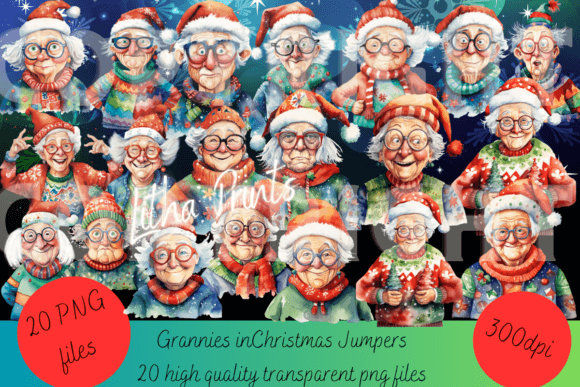
When I first opened the file for Crazy Grannies in Christmas Jumpers, I didn't just see a festive image; I saw a potential bestseller. As someone who has spent years evaluating digital assets for commercial embroidery projects, my initial reaction was to look past the holiday cheer and analyze the structural integrity of the design. This illustration belongs to the Illustrations category, but its true value lies in how it translates from a screen to a needle. It captures a specific mood—whimsical, slightly chaotic, and undeniably nostalgic—that is perfect for the current market demand for personalized gifts and boutique branding.
The concept of grannies rocking out in Christmas jumpers immediately suggests a narrative. It isn't just about knitting socks; it is about attitude. For an embroidery designer, this personality is gold. When you are creating a custom embroidered tote bag or a sweatshirt for a holiday party, the design needs to tell a story before the customer even reads the tag. Crazy Grannies in Christmas Jumpers delivers that visual punch. The layout feels balanced, with enough negative space to allow the stitching to breathe, which is crucial for maintaining stitch density without causing puckering on softer fabrics like fleece or jersey.
I recently tested this design on a heavy cotton canvas tote bag intended for a local craft fair booth. The goal was to create a unique piece of merchandise that would stand out among generic holiday stock. The moment I hooped the fabric, I realized why this works so well as a tote bag design. The central focus of the grannies allows the surrounding elements to frame the scene perfectly without overwhelming the bag's structure. However, I had to be careful with the thread colors. On a dark canvas, the lighter threads needed extra attention to ensure they popped, while on a white background, the darker outlines provided excellent definition. This versatility makes it a strong candidate for holiday embroidery collections where contrast is key.
Real-World Application: From Screen to Stitch
Moving beyond the tote bag, I considered how Crazy Grannies in Christmas Jumpers would perform on other common items. Imagine a small business owner preparing a line of holiday aprons for a kitchenware shop. The design fits naturally on the bib of an apron, adding a touch of humor to a functional item. The character details in the grannies' faces require a good level of resolution, but the design seems optimized to handle facial expressions without losing clarity in the smaller areas. This is vital for embroidery project success, especially when the final product is a personalized gift meant to evoke an emotional response.
For those looking to expand into baby products, this design could be adapted for a baby blanket or a onesie. The "crazy" aspect of the theme adds a modern twist to traditional nursery decor. However, I would advise using a lighter thread palette for baby items to soften the overall look. The design also translates beautifully to a sweatshirt embroidery project. The fill stitches used in the jumpers provide a nice texture that mimics the knit of the garment itself, creating a cohesive finished product. When customers receive a hoodie with this design, the quality of the stitching communicates professionalism and trust in the brand.
Another exciting application is for embroidered patches. If you plan to sell these as iron-ons or sew-on accessories, the clean lines of Crazy Grannies in Christmas Jumpers work well. Patches often suffer from detail loss due to the dense stitching required to keep them durable, but this illustration appears to have sufficient spacing between elements to prevent thread clumping. It creates a distinct badge-like appearance that fits perfectly with small shop product lines or Etsy seller inventories.
Navigating Potential Pitfalls
While the design is promising, no machine embroidery file is without its challenges. One area where Crazy Grannies in Christmas Jumpers requires caution is on curved surfaces like caps or hats. The curvature can distort the perspective of the grannies if not compensated for during digitizing. If you are planning to use this for commercial embroidery on headwear, I strongly recommend testing the design on a sample cap first. The tension settings might need adjustment to accommodate the curve, ensuring the characters don't appear stretched or squashed.
Textured fabrics present another hurdle. While the design looks great on smooth cottons and polyesters, applying it to a heavily textured wool or boucle fabric could obscure the finer details. The running stitches used for hair or accessory details might get lost in the weave. In these cases, choosing a stabilizer with higher weight or backing is essential to support the fabric and maintain the integrity of the embroidery file. Additionally, thin fabrics should be avoided unless reinforced with a cut-away stabilizer, as the pull of the stitches could cause the material to tear or warp over time.
Dense stitch areas are always a risk factor. If the original digitization packs too many stitches into the grannies' faces or the patterns on their jumpers, the resulting fabric will become stiff and difficult to wear. Before committing to a full production run, check the stitch density settings. You want the design to feel soft and pliable, not like a rigid patch. This is particularly important for apparel decorators who want their clients to actually wear the items repeatedly.
Practical Notes for the Creative Entrepreneur
If you are a craft business owner or a digital product seller, your next step should be rigorous testing. Do not assume the design will work perfectly on every machine. Test the design on scrap fabric first to gauge the tension and thread usage. Review the color separation to ensure there is enough contrast between the different elements. A black-and-white mockup can help you visualize how the design will look without the distraction of color, highlighting any potential issues with detail visibility.
Confirming the licensing terms is equally critical. Before selling finished items featuring Crazy Grannies in Christmas Jumpers, verify whether the license allows for commercial use. Some designs are restricted to personal projects only, while others may require a specific commercial license fee. Ignoring this step can lead to legal trouble down the road. Also, inspect the small details closely. Are the eyes clear? Is the text legible? These micro-details make the difference between a mass-produced look and a high-end handmade product.
When creating printable mockups for your online store, use the design on various backgrounds to show its versatility. Show it on a white t-shirt, a dark tote bag, and a colorful pillow cover. This helps potential buyers visualize the final product and increases buyer engagement. Remember, a well-executed embroidery project builds brand consistency. If your customers see that you pay attention to stitch quality and design placement, they are more likely to trust your brand with future purchases.
In conclusion, Crazy Grannies in Christmas Jumpers is a versatile and charming asset for any embroidery portfolio. Its whimsical theme resonates well with holiday shoppers, and its structure supports a wide range of applications from custom apparel to home decor. By approaching it with a critical eye regarding fabric choice, stabilization, and testing, you can turn this digital asset into a profitable reality. Whether you are a hobbyist making gifts or a seasoned entrepreneur scaling up production, this design offers a solid foundation for creative expression. Just remember to check the technical specs, respect the fabric, and let the grannies bring some joy to your customers' holidays.