Christmas Hot Cocoa Watercolor Clipart: A Designer's Review of Freebies
As a graphic designer who spends most of my week balancing client expectations with creative execution, I am always on the lookout for assets that can elevate a project without demanding hours of manual tweaking. Recently, I encountered Christmas Hot Cocoa Watercolor Clipart while browsing a collection of Freebies. My initial reaction was one of cautious optimism. In the world of commercial design, watercolor textures often present a challenge: they can look charming in isolation but fail to integrate seamlessly into a cohesive brand identity. However, after putting this asset through a rigorous mental stress test based on a real-world scenario, I found it to be a surprisingly robust tool for specific seasonal campaigns.
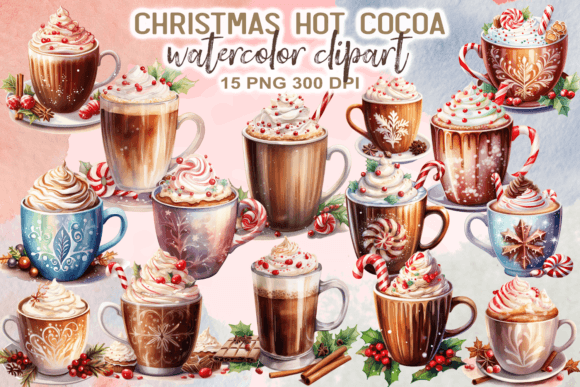
The project at hand involved a boutique coffee shop launching a holiday gift box line. The owner wanted visuals that felt handmade and warm, avoiding the sterile perfection of corporate vector art. This is where Christmas Hot Cocoa Watercolor Clipart shines. The first impression is undeniably cozy. The brushstrokes feel organic, capturing the steam rising from a mug and the rich, deep tones of chocolate against a snowy backdrop. It immediately establishes a mood of comfort and nostalgia, which is exactly what a small business needs to connect emotionally with their audience during the holidays.
Evaluating Visual Hierarchy and Brand Consistency
In any brand identity or marketing visuals project, visual hierarchy is paramount. Does the asset compete with the typography, or does it support it? When I placed this clipart next to various font styles, I noticed that it pairs exceptionally well with script fonts and handwritten styles. The soft edges of the watercolor illustration complement the fluid lines of a cursive typeface, creating a unified aesthetic that screams "handcrafted." Conversely, pairing it with a rigid sans-serif font required careful adjustment of spacing to prevent the design from feeling disjointed.
This asset performs best when used as a supporting element rather than the sole focal point. For instance, in a packaging design context, the hot cocoa illustration serves as a delightful accent on a kraft paper label. It adds texture and depth that flat colors simply cannot achieve. However, designers must exercise caution in minimalist branding projects. If the client's goal is ultra-clean, modern corporate aesthetics, the painterly nature of this watercolor might introduce too much visual noise. It belongs in environments where imperfection is celebrated as a feature, not a bug.
Ideas for Application Across Digital and Physical Media
The versatility of this graphic design asset extends far beyond simple digital wallpapers. Here is how I envision it functioning across different mediums:
- Social Media Graphics: On platforms like Instagram or Pinterest, these illustrations work wonders as background elements for promotional posts. They create a warm frame around text overlays, drawing the eye inward. As part of a design bundle, they could easily form a series of themed cards for a winter campaign.
- Print-on-Demand and Merchandise: For sellers using Cricut machines or sublimation printers, this PNG design offers high-quality edges that reproduce well on mugs, tote bags, and t-shirts. The watercolor effect translates beautifully to fabric, adding a soft touch to apparel designs.
- Editorial Design: Bloggers and publishers looking to spice up a holiday article about winter recipes could use these images as drop caps or section dividers. They break up text blocks effectively while maintaining a thematic connection.
- Digital Products: Creators building Canva templates or printable wall art will find this asset invaluable. It allows non-designers to create professional-looking layouts instantly by dragging and dropping a pre-made, high-resolution element.
Technical Considerations Before You Commit
Before integrating Christmas Hot Cocoa Watercolor Clipart into a live client project, there are several technical checks every professional should perform. First and foremost, verify the file formats. Is it a raster image or a vector? If it is a SVG design, you have the flexibility to scale it infinitely without losing quality, which is crucial for large format prints like posters or banners. If it is a PNG design, ensure the transparency is clean; jagged edges around the watercolor splashes can ruin a polished look.
Contrast testing is another critical step. Watercolors can sometimes appear muddy when placed over light backgrounds or disappear entirely on dark ones. I recommend previewing the asset on both white and black backgrounds to ensure legibility. Furthermore, always test the asset in black and white. This reveals if the design relies solely on color to convey its shape or if the value structure holds up independently. This is vital for ensuring accessibility and print reliability.
When considering typography pairings, compare serif, sans-serif, script, and display fonts side-by-side. A modern design approach might benefit from a bold display font to anchor the whimsical illustration, whereas a traditional approach might lean toward a classic serif. The key is to maintain visual trust; the font and image must speak the same language.
Commercial Licensing and Usage Rights
One of the most common pitfalls in the creative marketplace is assuming that a free asset comes with full commercial rights. Even though this falls under the category of Freebies, the licensing terms vary wildly. Before using this asset for a small business branding project or an Etsy product, you must confirm the commercial license. Some licenses allow personal use only, while others permit unlimited commercial applications but restrict resale of the raw files.
For those engaging in print-on-demand or selling physical goods, the distinction between a standard license and an extended license can determine whether your business model is sustainable. Always read the fine print. If the asset is intended for a digital seller reselling templates, ensure the terms explicitly allow for redistribution within a template environment.
Final Verdict on Seasonal Design Assets
Ultimately, Christmas Hot Cocoa Watercolor Clipart is a strong contender for designers seeking to inject warmth and personality into their holiday projects. It excels in scenarios requiring emotional engagement, such as greeting cards, bakery packaging, and cozy home decor marketing. It is less suitable for high-stakes corporate communications where clarity and minimalism are the primary goals.
By treating this asset with the same scrutiny as any paid premium resource, designers can unlock its potential to create stunning holiday graphics that resonate with audiences. Whether you are crafting a Cricut project for a local craft fair or designing a comprehensive seasonal campaign for a retail chain, this watercolor illustration offers a reliable foundation for creative success. Just remember to respect the technical limitations and legal boundaries to ensure your final output remains professional and compliant.